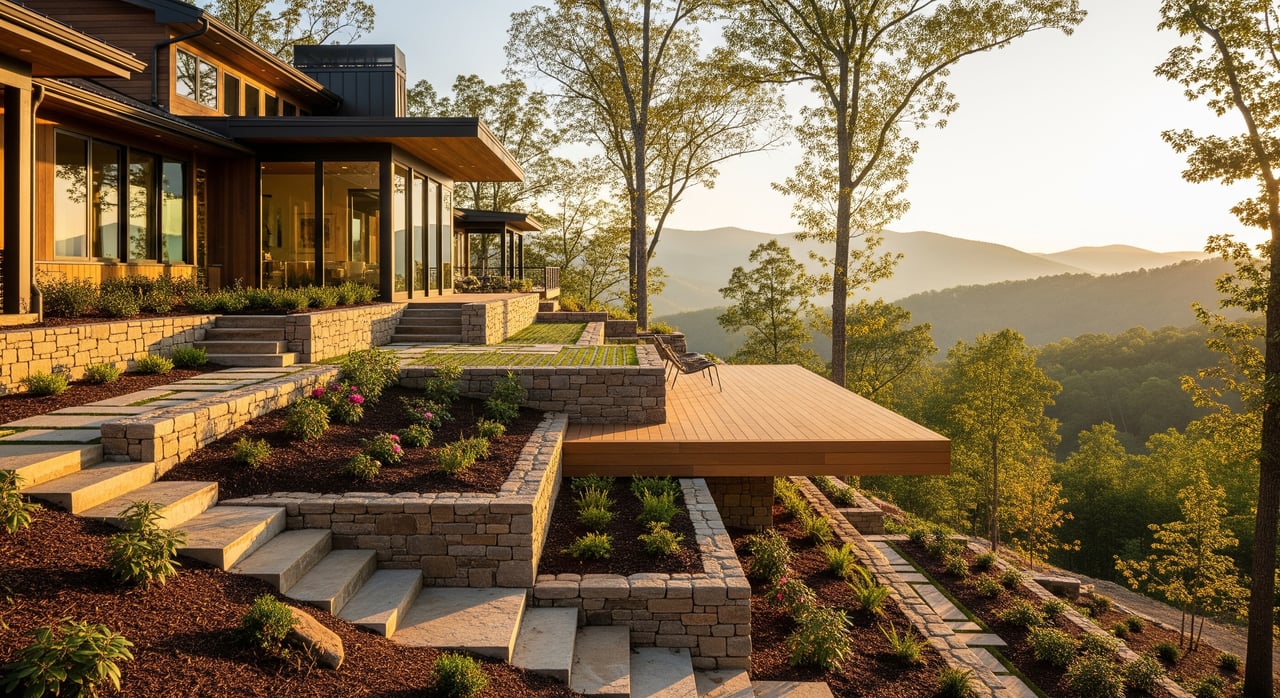
Buying or living on a hillside in Brevard can be beautiful, but one hard rain can test your slopes. With our region’s steep terrain and heavy annual rainfall, smart slope design is not optional. You want peace of mind, code compliance, and solutions that work with the land. This guide shows you how to plan, build, and maintain low‑impact slopes that protect your home and investment. Let’s dive in.
Why Brevard slopes need care
Brevard sits in the southern Blue Ridge where long‑term records show annual precipitation in the high 60s to mid 70s inches, with higher elevations in Transylvania County reaching near 100 inches in some areas. That much water, especially in short, intense storms, can saturate soil and trigger slope movement. Western North Carolina has a documented landslide history, and state tools map susceptibility in and around Brevard. Use those maps early to understand risk and plan improvements accordingly.
- Learn more about rainfall patterns in Brevard from long‑term climate data.
- Review mapped landslide start‑areas and susceptibility using the NC landslide viewer.
Know the rules before you dig
The City of Brevard’s Unified Development Ordinance (UDO) includes post‑construction stormwater standards, a 30‑foot buffer along surface waters for development, and floodplain development permits. Steep slopes often have special grading and disturbance limits, commonly applied around the 25 percent slope mark. Always confirm exact thresholds and any mapped overlays for your parcel.
- Check the City’s UDO, floodplain requirements, and mapping at the City of Brevard Code portal.
- Outside city limits, contact Transylvania County Planning about subdivision, septic, and site constraints. Countywide zoning is limited, and steep‑slope authority has been granted by the state. See Transylvania County Planning and the state session law authorization.
- For regional context on steep‑slope standards, review this WNC stormwater and ordinance overview.
Start with a site assessment
For any slope you plan to alter, especially above about 20 to 25 percent, involve a licensed geotechnical engineer and a surveyor before grading or building. A geotechnical report identifies soil strength, groundwater, setbacks, and stabilization options. This step helps you avoid costly mistakes and aligns your plans with local rules.
- Pull parcel‑specific soils and limitations using the USDA NRCS Web Soil Survey.
Drainage first
Keeping water out of the slope is your best defense. Concentrated runoff from roofs, driveways, and patios commonly triggers failures. Design to slow, spread, and safely convey water to stable outlets.
- Grade to shed water away from slope tops. Do not discharge roof or yard water directly onto a slope.
- Extend downspouts to splash blocks or buried drainpipes that daylight at a non‑eroding location.
- Add shallow vegetated swales, level spreaders, or check dams to slow and spread flow.
- Where seepage exists, consider subsurface drains with a safe outlet and plan for maintenance.
For homeowner‑friendly techniques, see NC Cooperative Extension’s guidance on erosion control basics.
Shape slopes with care
When space allows, gentler grades and terraces reduce pressure on soils and make planting easier. If you need a retaining wall, have it designed by a qualified engineer. The number one cause of wall failure is poor drainage behind the wall.
- Include granular backfill, weep holes, and drainpipes to relieve pressure.
- Avoid adding heavy loads near the top of a slope without an engineer’s review.
- Do not rely on stacked stone or tall timber walls for structural support.
Read about common pitfalls in this overview of retaining wall failures on slopes.
Plant for stability
Vegetation helps bind soil, slow runoff, and protect against erosion. Favor native, deep‑rooted species and a mix of grasses, shrubs, and small trees. Avoid invasive groundcovers that can smother native plants but do little for soil structure.
- Use biodegradable mats (jute or coir), wattles set on contour, and mulch to protect disturbed soil until plants take hold.
- Good Western NC candidates include native sedges, little bluestem, switchgrass, Virginia sweetspire, native viburnums, serviceberry, and dogwood as site conditions allow.
Find plant lists and how‑to tips in NC Cooperative Extension’s guide to stabilizing slopes.
Design low impact
Low‑impact development reduces strain on slopes and streams.
- Minimize impervious surfaces upslope and keep natural drainage paths intact.
- Cluster structures on flatter, more stable portions of the lot.
- Use pervious pavers or infiltration features where practical.
- Maintain vegetated buffers along streams and follow the City’s post‑construction stormwater requirements.
For local context, review this WNC steep‑slope and stormwater summary and the City’s UDO.
Maintenance checklist
Simple upkeep goes a long way, especially after heavy rain.
- Clear gutters and inlet grates each season and after big storms.
- Inspect downspout outlets and daylighted drains for erosion or blockage.
- Repair small rills and gullies quickly before they grow.
- Keep slope toes free of concentrated runoff.
- Check retaining wall weep holes and outlets annually.
NC Cooperative Extension emphasizes early stabilization and quick repairs in its slope care guidance.
Spot risk early
Watch for warning signs like new foundation cracks that cross mortar joints, sticky doors or windows, tilted trees or poles, fresh scarps, bulging ground, displaced retaining walls, new seeps on a slope face, or sudden gullying. If you see these, keep people away from the area and call a geotechnical engineer. Contact local emergency management if failure seems imminent.
Buying or selling on a slope
If you are buying, ask for the Residential Property Disclosure and review it carefully. North Carolina now requires certain flood history and risk items to be disclosed. Pair that with a home inspection and, for steep or suspect lots, a geotechnical evaluation. Verify that any grading or walls have the proper permits.
- Read the state’s Residential Property Disclosure provisions here: NC statute overview.
- Check local requirements at the City of Brevard Code portal and county process at Transylvania County Planning.
- Review mapped susceptibility and past events using the NC landslide viewer.
Ready to weigh a hillside home or prep your property for market with confidence? Reach out to the Steve Dozier Group for steady, local guidance grounded in Western NC experience.
FAQs
What counts as a steep slope in Brevard rules?
- The City’s development regulations apply special standards to steep slopes, commonly around 25 percent. Always verify exact thresholds and mapping in the City’s UDO and this regional steep‑slope overview.
How much rain does Brevard get and why does it matter?
- Long‑term data show annual totals in the high 60s to mid 70s inches, with higher elevations receiving more. Intense storms can saturate soils and increase landslide risk, so drainage design is critical. See the Brevard climate record.
Do I need an engineer for a retaining wall on a hillside?
- For anything beyond small landscape edging, yes. Proper design and drainage behind the wall are essential to prevent failure. Learn more from this retaining wall failure case study and consult a geotechnical engineer for sloped sites.
What are quick, low‑cost ways to stabilize a small slope?
- Install biodegradable erosion control blankets, place wattles on contour, mulch disturbed areas, and plant native species quickly. See Extension guidance on erosion control basics and stabilizing slopes.
What should buyers review before closing on a sloped property?
- Read the Residential Property Disclosure, schedule inspections, review the NC landslide viewer, and confirm permits for past grading or walls. Start with the NC disclosure statute and the City’s UDO.